Representing Form
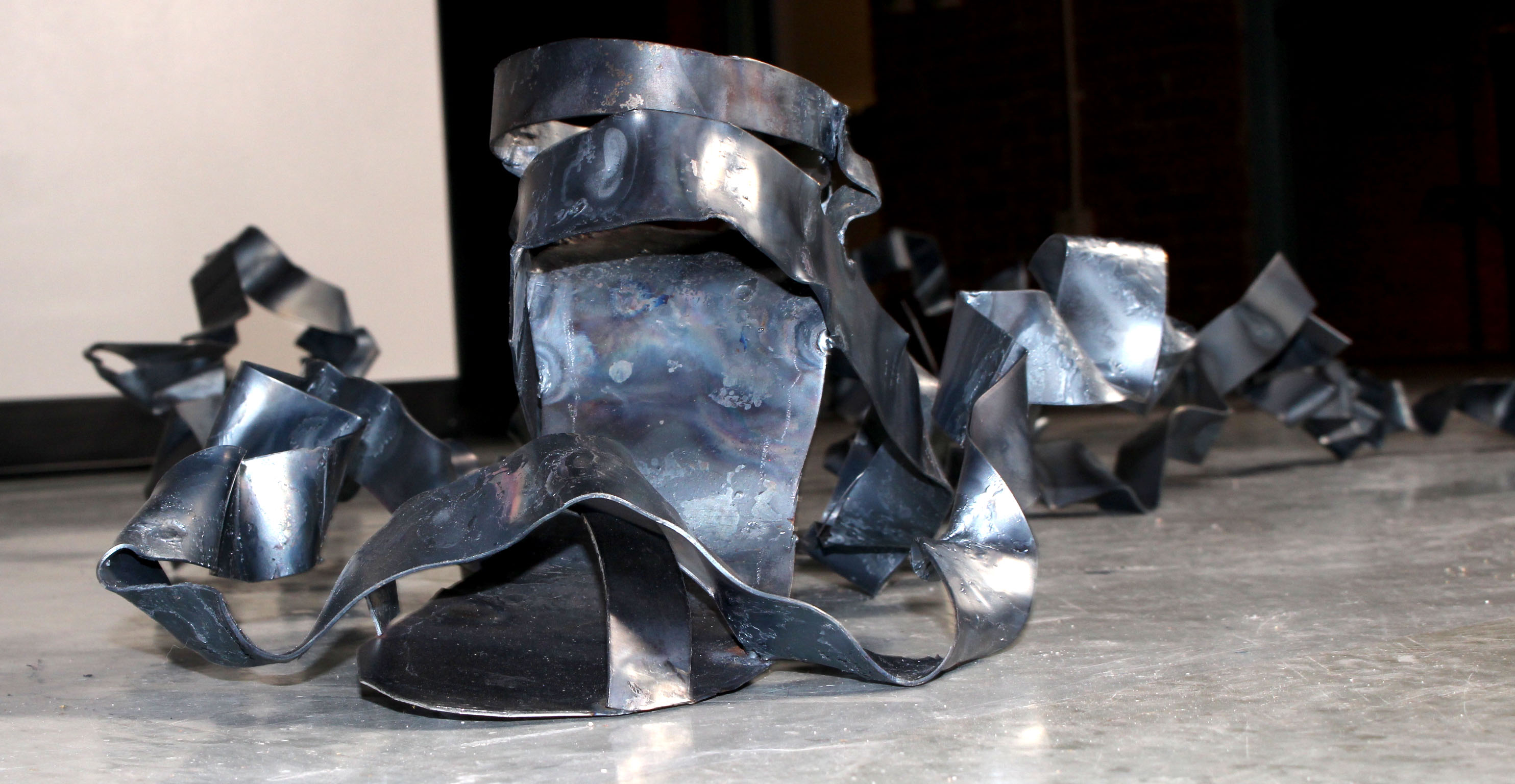
For this project the goal was to imply human form without using human form, but rather objects and actions to imply it. We were to create something that the viewer would put themselves into.
Some of the ways one can place the viewer mentally in the sculpture, is to have the sculpture represent certain feelings or emotions. Things like pain, pleasure, sensation, danger, safety.
I, as did a lot of my peers, struggled to nail down a concept at first. Usually, the development of an idea comes fairly naturally for me. I do not usually struggle to think of ideas or develop stronger ones into solid concepts. This project really pushed me in this area and I enjoyed the challenge. Here are some of my initial gestured ideas:
After some workshopping my concept a bit I ended up with this:
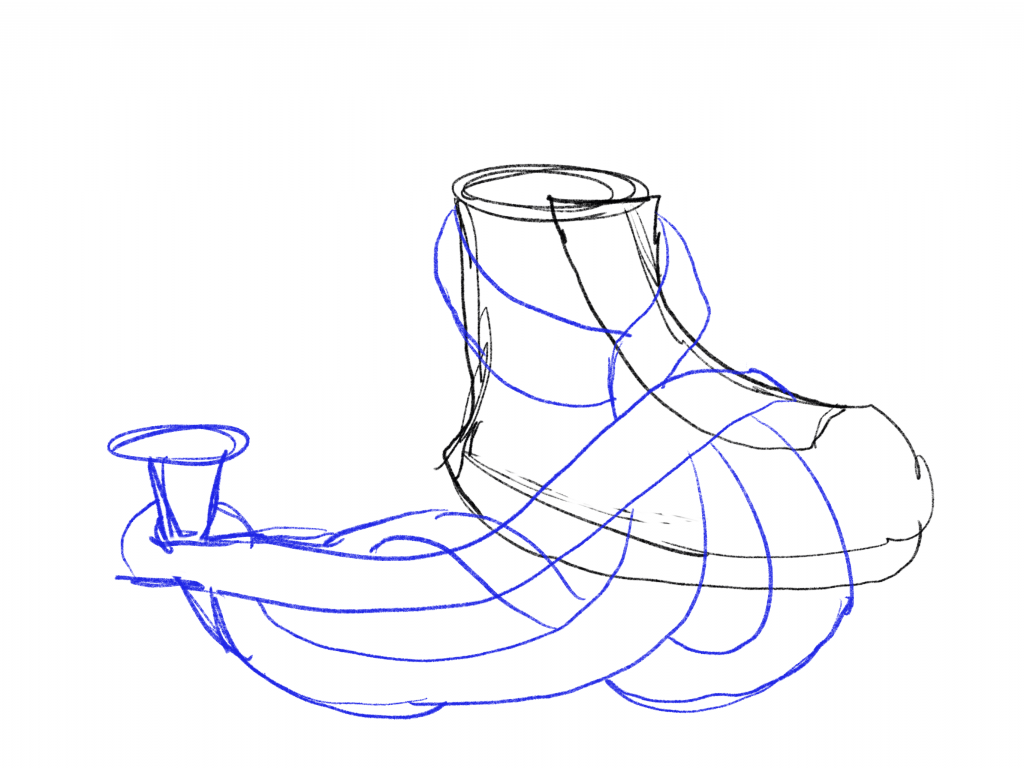
After I had my concept nailed down. I moved to doing a life-size gesture. I actually ended up changing up my imagery during this step as well. Switching the work boot for a heel and getting rid of the nail holding down the straps.
[ngg src=”galleries” ids=”10″ display=”basic_slideshow”]From there I began to make my maquette out of paper and tape. Moving from planning in 2D to 3D really helped me develop my idea a lot more. I made my Marquette’s at home, which always comes with the challenge of receiving unwanted help.
[ngg src=”galleries” ids=”11″ display=”basic_slideshow” arrows=”1″ transition_speed=”250″]Once my maquette was built, I took it apart to use each section as a stencil. Then I traced them onto the metal and cut them. I then cut strips of metal to later turn into the straps.
With my pieces cut out, I began to heat the metal with the cutting torch and bend it to the desired shape. I started with the sole of the shoe which presented a challenge. It was a while of bending and hammering before I got the desired shape.
[ngg src=”galleries” ids=”14″ display=”basic_slideshow”]From there I molded and attached each piece. During this process, I ended up changing the design again. The large piece at the toe was very bulky and made it seem more like a bent slipper than an elegant heel. So I switched it out for two smaller strips which ended up looking a lot better.
[ngg src=”galleries” ids=”13″ display=”basic_slideshow” arrows=”1″] [ngg src=”galleries” ids=”12″ display=”basic_slideshow” arrows=”1″]Between shaping and adding each piece to the heel I did a small material study to see the best way to make the straps. Bend them to imply the shape of the foot first, and then add the fabric texture, Or add the texture first and then bend. I found it best to bend the shape first, attach to the heel, and then add texture. Once my straps were attached and bent I started to add other strips to make them longer.
[ngg src=”galleries” ids=”26″ display=”basic_slideshow” pauseonhover=”0″ arrows=”1″ transition_speed=”290″]I ended up not completely welding all of the straps together, so the piece could be taken apart and moved. I think having the spaces also gave the piece a more dynamic feel. Like the straps were alive almost.
The one thing I struggle with, is how lost my shoe gets under the straps. When you look at it you don’t really know what it is. If I were to go back, or continue this piece, I would find a way to make it stick out more. One way that was suggested was to paint it. Another may be to make the heel bigger in the future. That would reinforce the concept of the viewer projecting themselves into the shoe.
[ngg src=”galleries” ids=”25″ display=”basic_slideshow” pauseonhover=”0″ arrows=”1″ transition_speed=”290″]