Wooden Chair
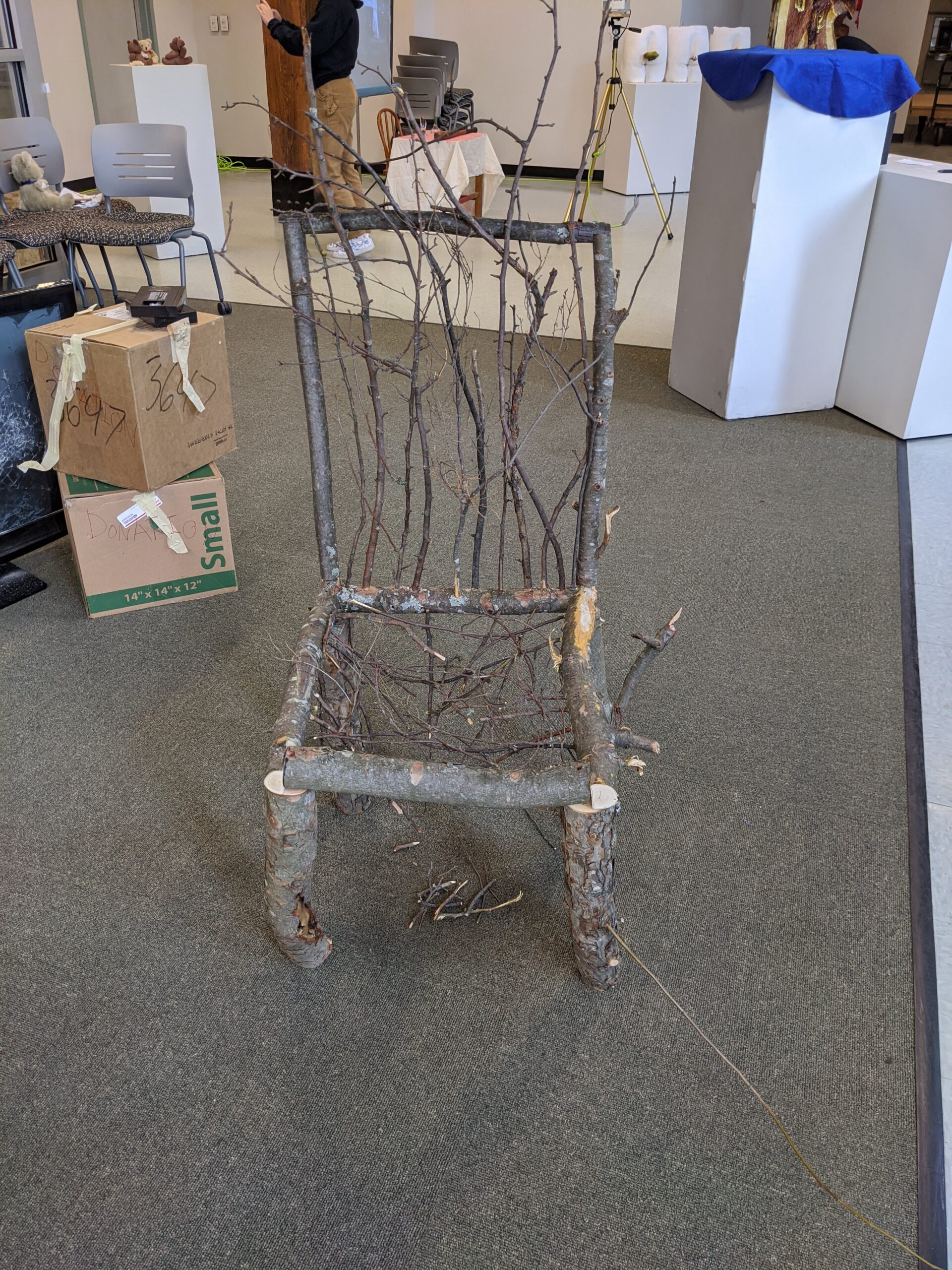
To be perfectly up front. I really struggled with creating ideas for the wooden part of this piece. Since I’ve never worked with wood before, or even really stepped into a woodshop for that matter, it was difficult to design something and know I could build it.
What I did know, was that I wanted it to represent pre-industrial times, and nature. So I began to draw and sketch from there.
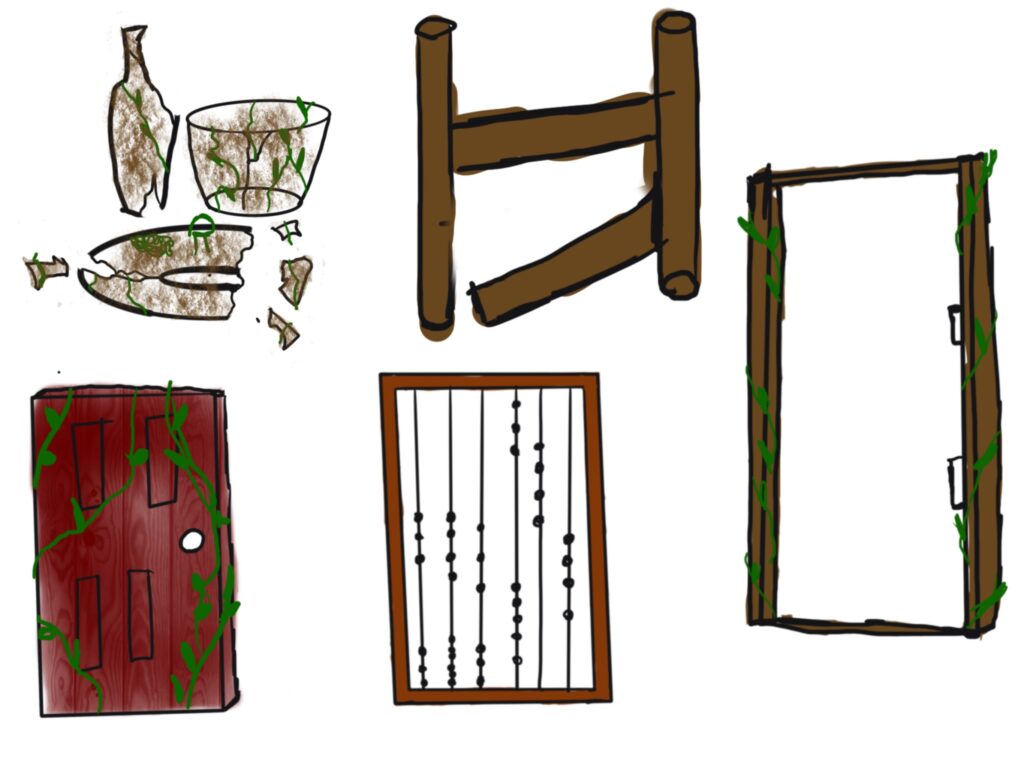
It was hard to find a balance between something that I would be able to create as a beginner, while still finding a way to make it dynamic and interesting. I was also threading a fine line between creating something that looks found, but is changed enough that it’s clear its made.
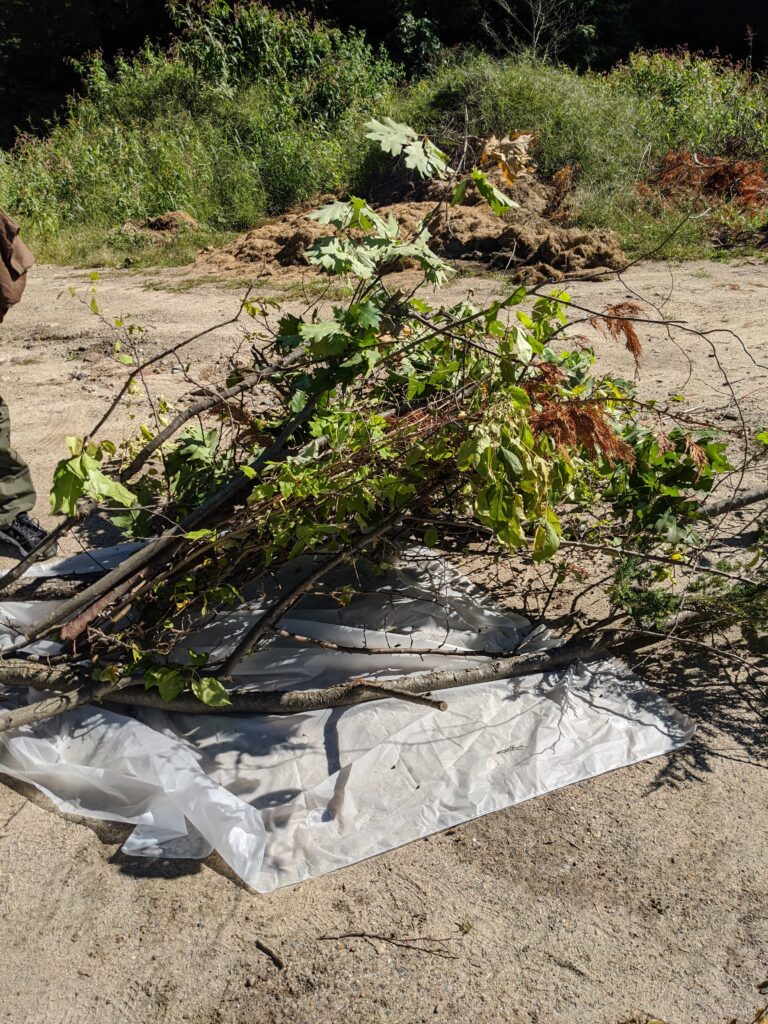
I came to the conclusion that I wanted to use disgarded brush, as even if I made something more modern, it would still resonate with nature, without having a man vs nature narrative.
Still, I was struggling with what to create, not having any experience with the material being a huge mental block for me. I ended up reaching out to multiple friends who had worked with wood before, asking what were some beginner woodworking projects, and seeing if I could make any of them a bit more visually dynamic.
One friend brought up maybe doing a chair, as I had done a little research on chairs for my objects and ideas class, and it was a more simple build, with a lot of information on measurements and design. I ended up liking this, and began playing around with its design to see if I could make it a little more visually interesting.
This ended up being my design, and I’m glad that I decided to do the chair, because this really helped me develop my other two parts, and make a stronger connection between them.
Once I knew what I wanted it to look like, I began planning out how to actually create it. Looking up the standard measurements for a chair and from there how long and thick each piece should be.
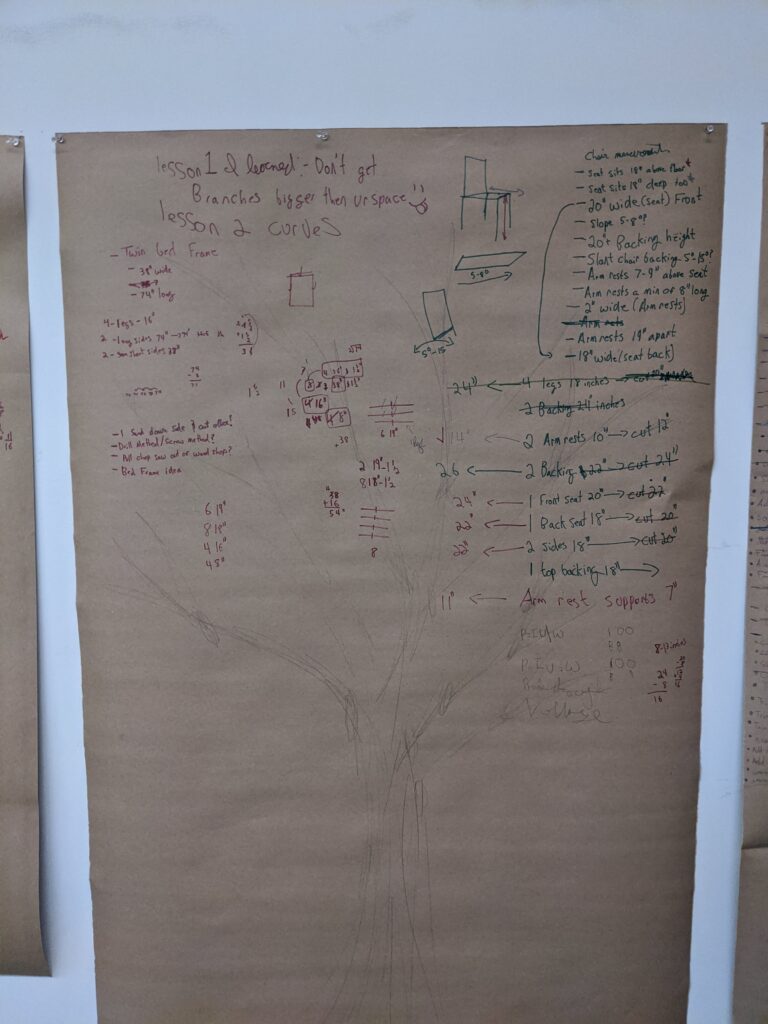
I then gathered my materials and cut them. Since I could not use the woodshop yet, I handcut all of my pieces at first. Leaving at least two inches for both sides to give me wiggle room for mistakes later on. It was very hard, and a lot of my beginning cuts were very uneven.
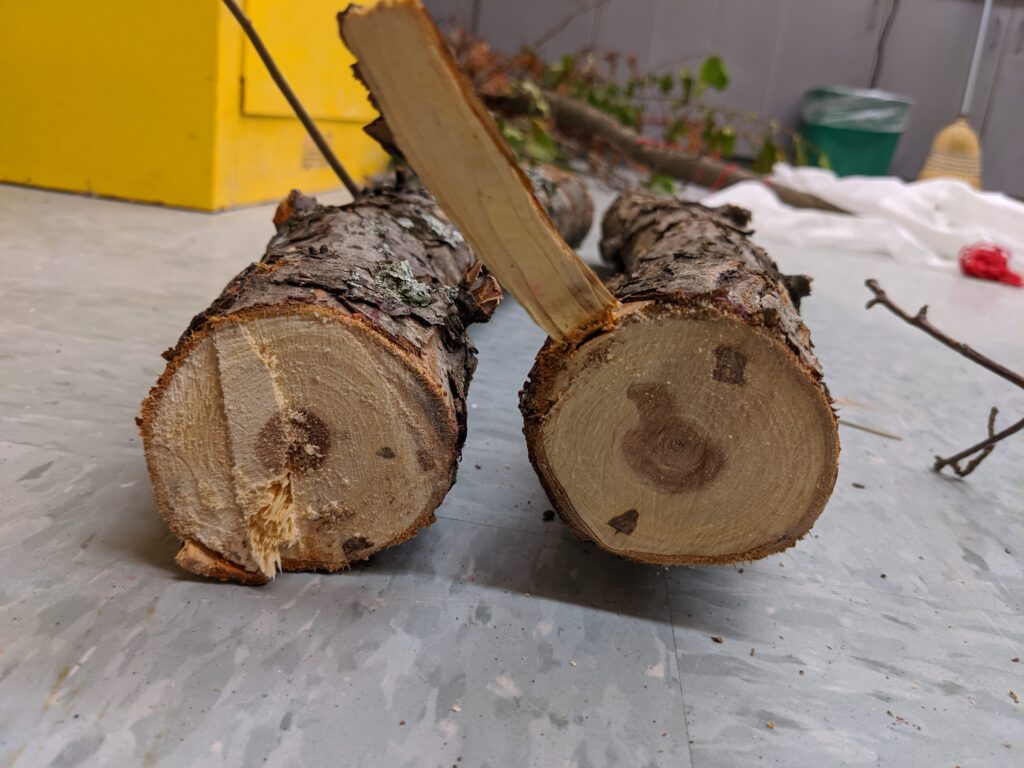
Soon I was trained in the woodshop, I was taught how to use the table saw, band saw, and chop saw. First I practiced using each of these with normal wood. Then I was shown techniques for cutting my brush both with the chop saw and with the band saw. I used the chop saw to trim down my rough edges as well as cut my pieces down to size.
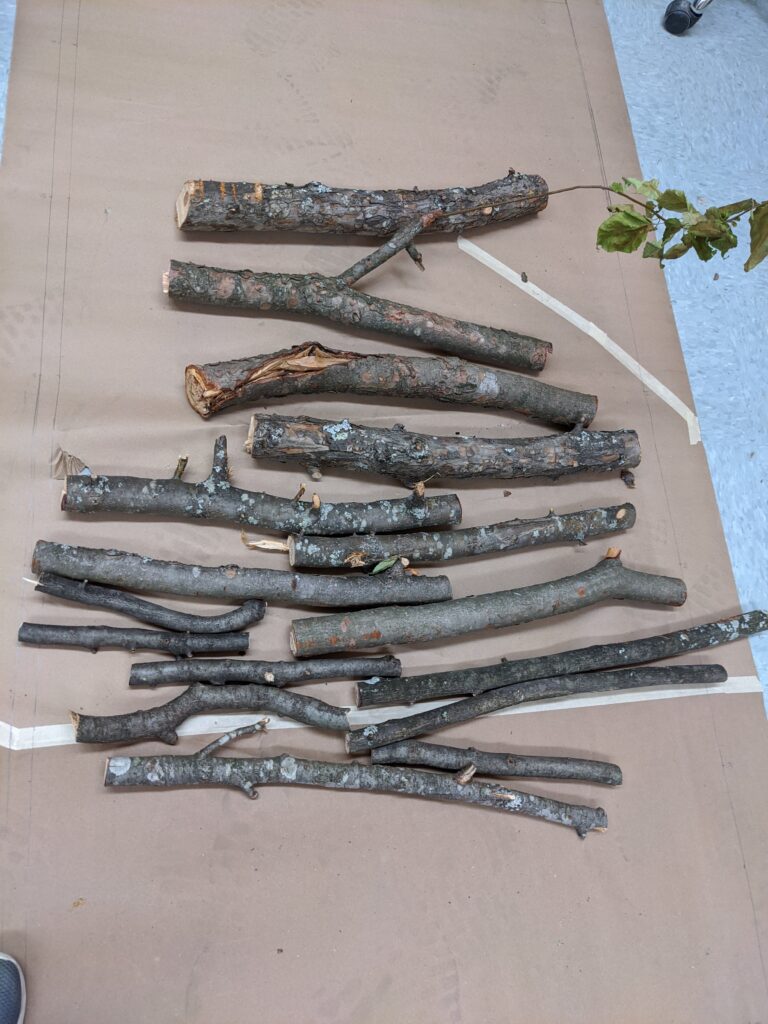
After everything was cut, I learned different techniques for attaching the different pieces. We also did some material studies to see which would work best for the brush.
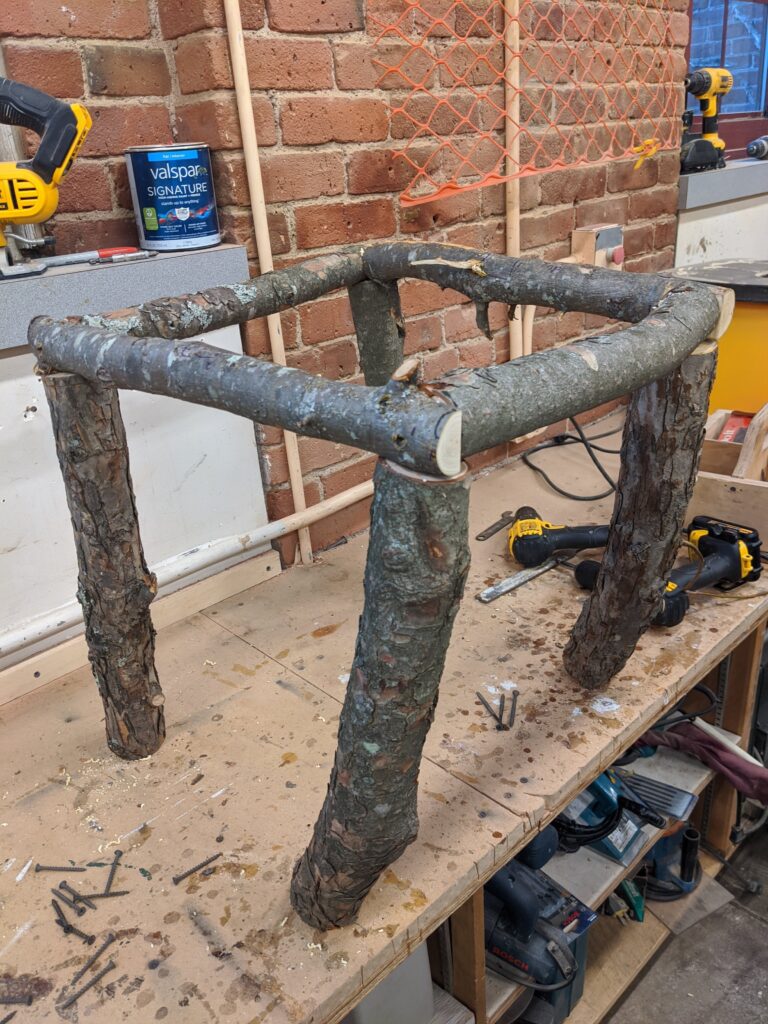
Since the brush is not uniform, and each piece has curves and different thickness, I decided to attach the pieced but cutting a flat indent into one piece and then placing the end of the other piece up against it. You then drill a hole through both pieces and place a screw there.
Once the base of the chair was assembled I began to add detail to the seat and backing. The backing was done by drilling a small hole into the back of the seat, putting a little bit of wood glue in the hole, and then placing the end of the branch in. I also used red string to hold the top of the stick in place while the glue was drying.
The seat was done similarly, and I made sure to point the sticks more downward then across to make it appear like the seat was broken. Once I had my base layer of sticks attached to the seat, I went back in and weaved loose twigs into the first layer.
Overall I’m happy with how the piece turned out. A big thank you to my classmate’s Andrew and Pine, as well as my instructor Phil. They jumped in and helped me a lot with this piece since I was new to the media, and struggling quite a bit at first.
If I could go back and change something about this part of my triptych, it would probably be to give myself some more time to get used to the woodshop. I think if this were the case, I wouldn’t have had to depend on my peers and instructor as much and may have been more confident in the process.