The Beginning of Mastering
Learning to wheel throw has always been something I was determined to do. Growing up, it seemed that everyone told me it was something for naturally born artists. That some just sat down at the wheel and after the first couple of attempts they had it.
I was not one of those people, so the very few times I was allowed to attempt to learn, I was often discreetly discouraged or just never given the full reins to try. I will say my high school teacher was very supportive, but with two broken wheels, 23 students, and a limited amount of bagged clay, there was not enough resource for me to take the time to learn.
That’s one of the main reasons I was so excited to take wheel explorations, and also for this project.
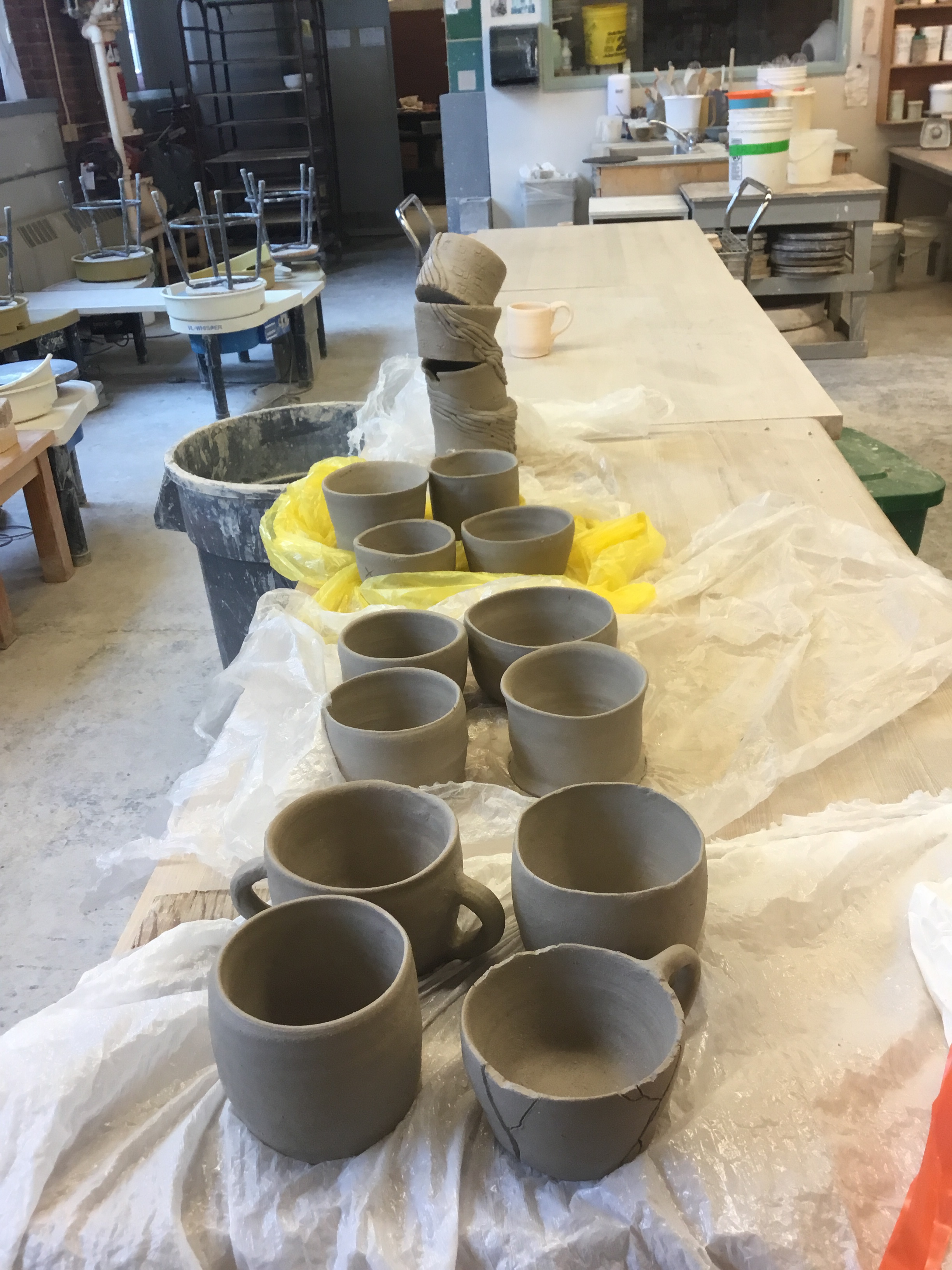
We were required to make 16 cylinders that were at least 6 inches, had wheel trimmed bottoms, a level lip, and flat inner bottom.
Starting out was reminiscent to my previous experiences with the wheel. I struggled to center my clay, and even when I managed too I still ended up having to throw out most of my attempts.
The first two throwing sessions, I did not keep a single attempt. My first 10 attempts I ended up chucking. It wasn’t until my third session that I finally completed two cylinders.
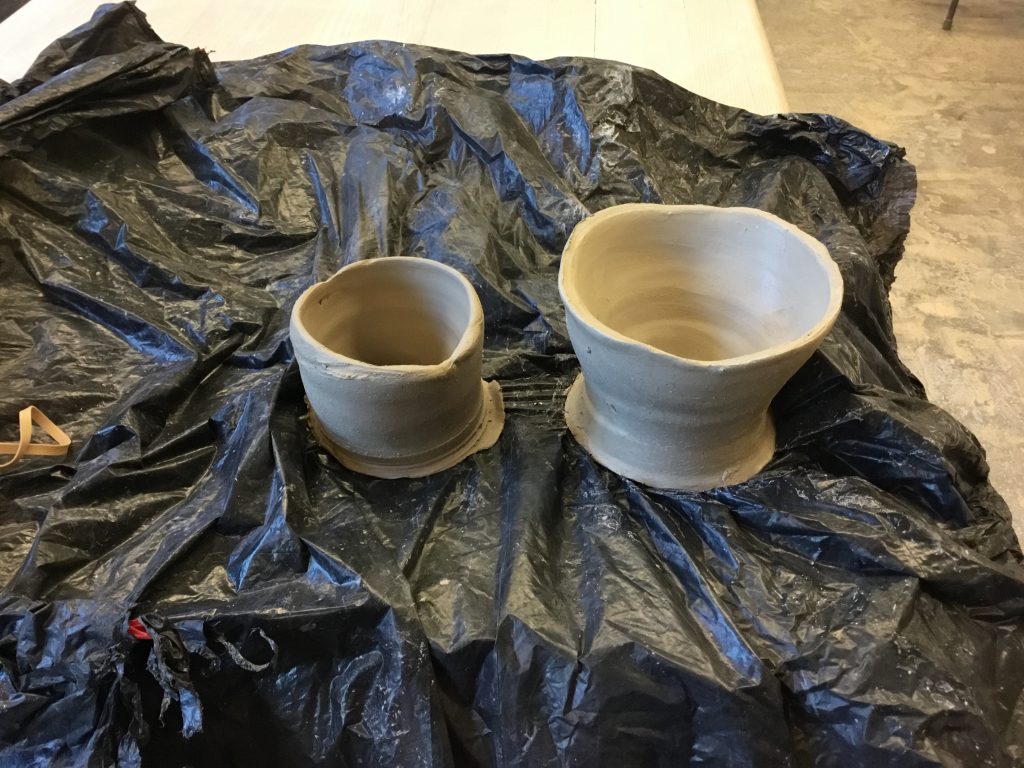
These two didn’t have wheel trimmed bottoms, even lips, or flat bottoms and when I originally saved them I had a feeling that by the end of making 16 I would throw these two out an remake them.
My next wheel throwing session went a lot better. I not only managed to start to get better but I also started to get a little faster. My biggest downfall was actually after I finished throwing. I dropped two cylinders and accidentally started my wheel in the middle of cutting one
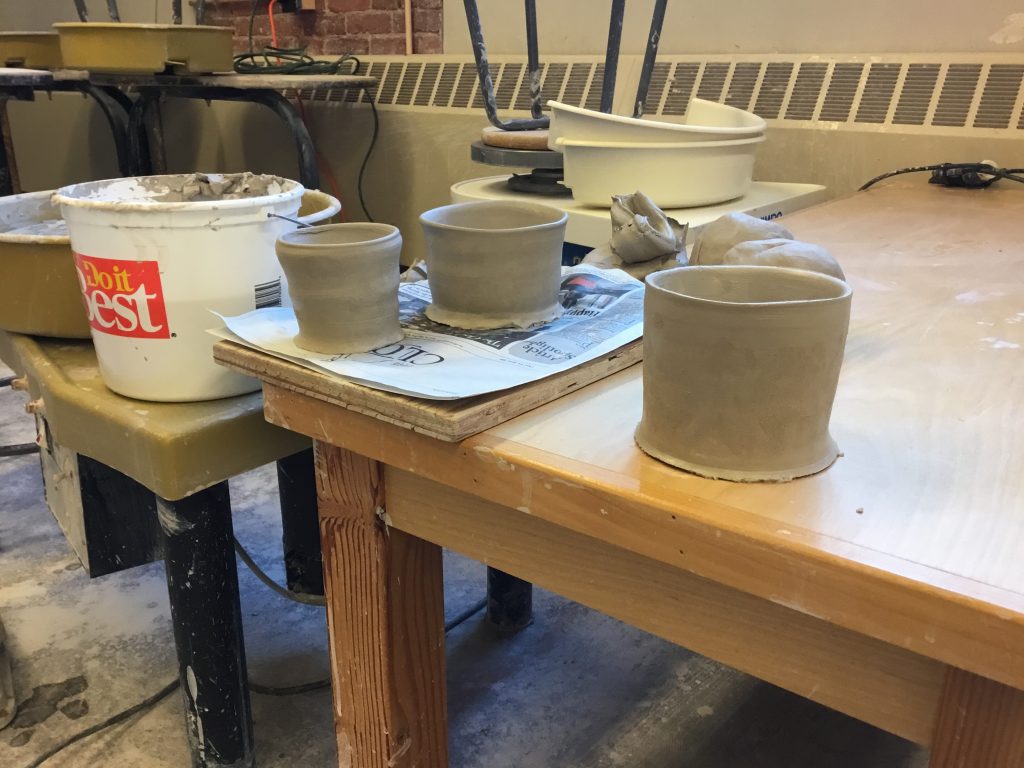
From these we can see an improvement in pulling from the bottom and having a more flat base. The lips are still uneven but a vast improvement.
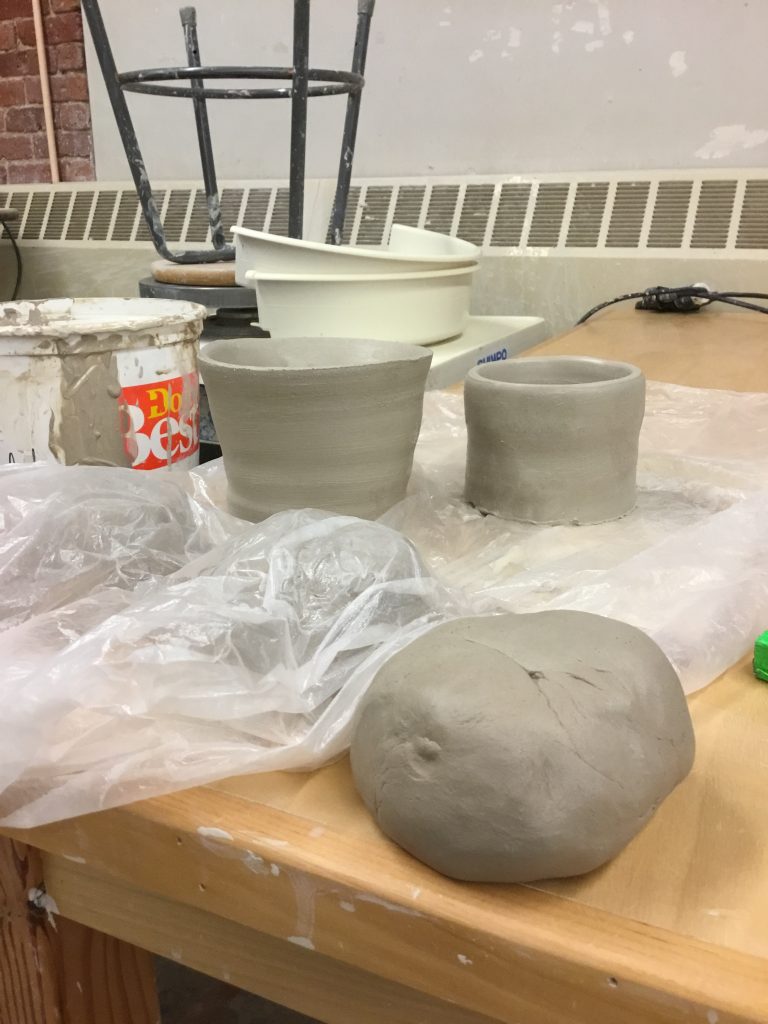
Lips are slowly getting better, it was a lot easier to have even lips and walls on smaller pieces. I think these two are a good side by side because it shows that I was trying to pull larger, but how this lead to other challenges.
There were also a couple pieces of mine that turned into bowls instead of cylinders, but I felt they were still decent attempts and I wanted to keep them as they represented a part of my learning experience. I managed to get even bottoms, but still struggle to add height while maintaining a even lip and solid bottom.